
How to Optimize Your Resume for ATS: 7 Actionable Rules
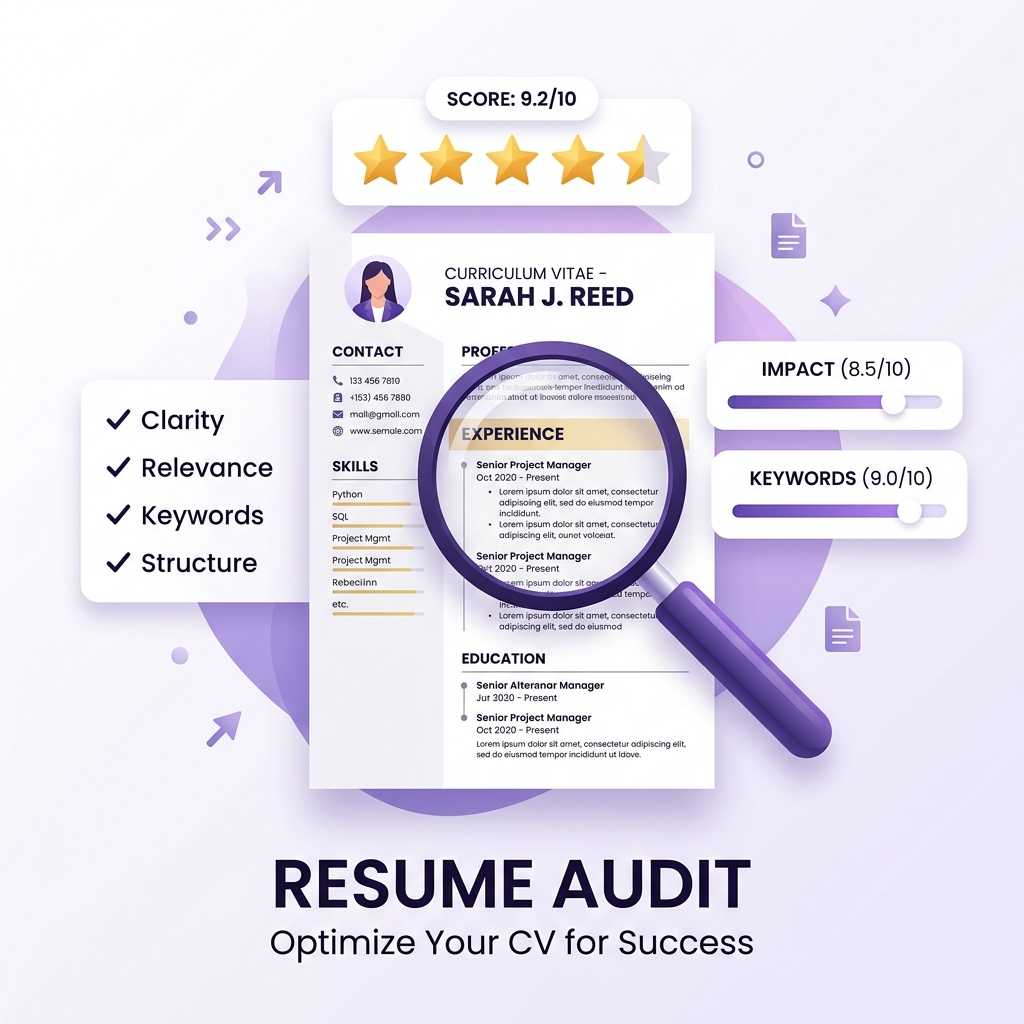
If you have been sending out dozens of applications and getting zero feedback, your resume is likely getting filtered out by Applicant Tracking Systems (ATS). But you don't have to stay invisible. Follow this step-by-step optimization blueprint to make your resume rank at the top.
When recruiters open an ATS database (like Workday, Taleo, or Greenhouse) to fill a role, they don't browse thousands of files. They type search queries like: "Software Engineer + React + PostgreSQL + 3+ years experience". If your resume does not match these queries structurally and semantically, you remain invisible.
Mirror the Job Description Keywords (Tailored Matching)
ATS scanners look for exact keyword matches. Read the target job posting carefully and list the technical skills, methodologies, tools, and certifications mentioned. Weave these phrases naturally into your "Skills" section and "Professional Experience" bullet points. For instance, if the description lists "REST APIs", write "REST APIs" in your bullet points rather than generic "interfaces".
Pro Tip: Never engage in "keyword stuffing" (like pasting lists of keywords in white font at the bottom). Modern ATS parsers convert files to plain text, exposing these invisible words, and flag the application as automated spam.
Adopt a Clean, Single-Column Layout
Avoid tables, columns, text boxes, graphs, and circular progress bars. ATS parsers read files from left to right. Side-by-side columns confuse the parser, causing text blocks to merge together. Keep your layout linear, reading cleanly from top to bottom.
Example: Instead of putting your contact details in a sidebar, place them at the very top as centered plain text.
Use Standard Section Titles
ATS software recognizes categories by scanning headings. Stick to standard labels: "Professional Experience", "Education", "Skills", "Projects", and "Certifications". Avoid creative section titles like "My Story", "Professional Journey", or "Where I Have Excelled", as the algorithm will skip those sections entirely.
Why this matters: If the parser can't recognize a section header, it cannot catalog the dates or companies associated with your career timeline.
Spell Out Both Acronyms and Full Names
Recruiters search databases using a mix of abbreviations and full words. A recruiter might type "MBA" or they might type "Master of Business Administration". To cover both bases, write both variants.
Example: "Certified Scrum Master (CSM)" or "Search Engine Optimization (SEO) Consultant".
Quantify Your Career Accomplishments
Do not just write a list of daily responsibilities. Instead, use quantifiable metrics that show impact. Recruiters search for numbers because they indicate high performance.
Instead of: "Managed social media pages." Write: "Managed social media channels, increasing follower engagement by 43% and generating 1,200 leads over 6 months."
Format Dates and Contact Info Accurately
Parsers identify work duration by looking for date formats. Use standard formats such as "MM/YYYY" (e.g., 08/2023) or spell out the month and year (e.g., August 2023). Always include start and end dates. If you are currently working somewhere, use "Present".
Also, avoid putting your email, phone, or location inside the document header or footer fields, as older ATS parsers ignore header/footer margins entirely.
Select Web-Safe standard Fonts
Use standard, highly legible fonts like Arial, Calibri, Helvetica, Georgia, Garamond, or Times New Roman. Decorative, custom, or imported web fonts can result in encoding issues, causing the parser to output random symbols (like squares or question marks) instead of your text.
Font sizes: Keep body text at 10-12pt, and headings at 14-16pt. Avoid custom icon sets or star ratings to represent skill proficiency.
Build a Ready-to-Send ATS Resume
Our free AI Resume Builder is fully structured to pass all major ATS parsers (Workday, Taleo, Greenhouse). Choose from clean templates, get instant AI bullet-point suggestions, and download your optimized PDF in minutes.
Create My Resume Free →The Bottom Line
ATS optimization is not about cheating or tricks. It is about removing layout obstacles so recruiters can clearly find your expertise. By following these 7 rules and using a clean, text-selectable layout, you will bypass the automated filters and get the interviews you deserve.
Recommended Career Resources
Our career experts and engineering teams review resume data patterns, hiring portals, and recruiting software interfaces to provide accurate guides. This content is verified regularly for alignment with 2026 hiring guidelines. Learn more about our scoring methodology.